


Free 48kWh Battery with Solar!Get Offer
Save Up to $16,000 on Solar!Claim Savings

Net Metering in Canada: How Solar Credits Work with Your Local Utility

Net Metering Program

Maximize Your Solar Investment with Net Metering

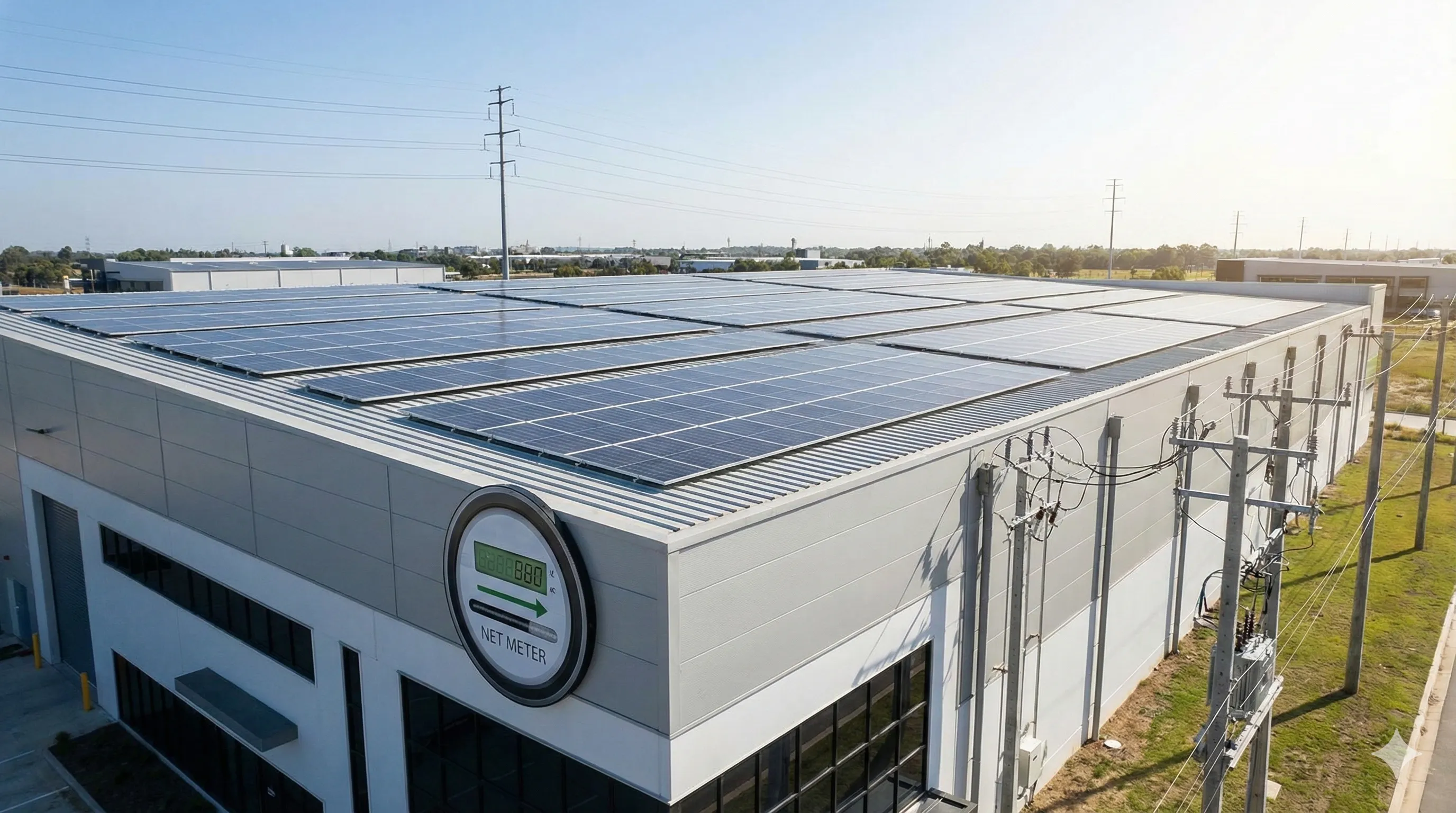
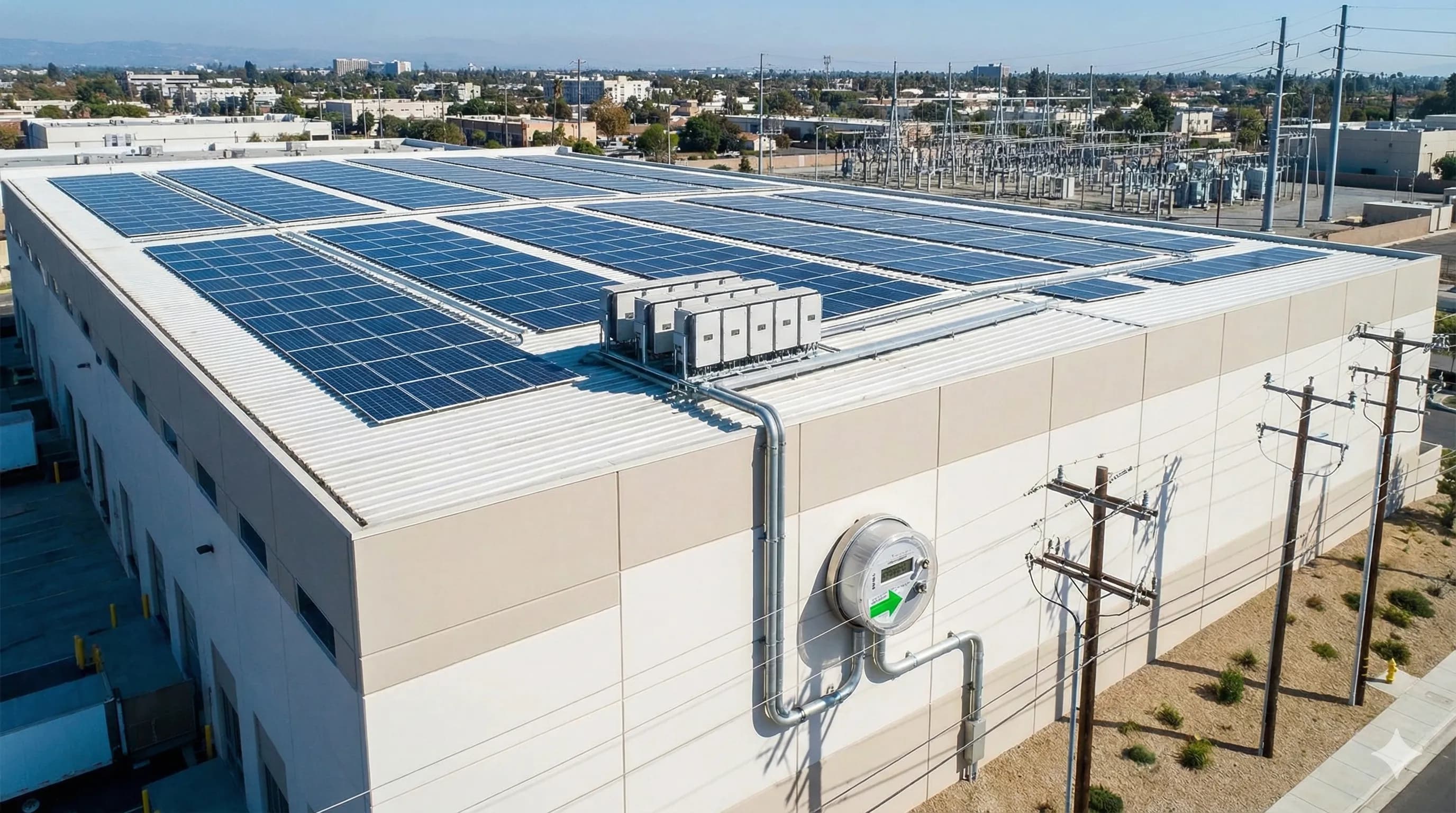
Net metering allows your commercial solar system to send excess electricity back to the grid, earning credits that significantly reduce your electricity bills and improve your ROI.

Reduce Electricity Bills
Export excess energy to the grid and receive credits that offset your electricity costs when your system isn't producing.
Maximize ROI
Maximize ROI
Net metering significantly improves your return on investment by ensuring no solar energy goes to waste.
Grid Integration
Grid Integration
Seamlessly integrate with the existing power grid, using it as a virtual battery for your excess energy.
24/7 Energy Access
24/7 Energy Access
Access power day and night - use grid power when needed, export excess during peak production hours.

How Net Metering Works

1

Solar Production

Your solar panels generate electricity during daylight hours, powering your business operations.

2

Energy Export

When you produce more energy than you use, the excess is automatically exported to the grid.

3

Credit Accumulation

You receive credits for the energy you export, which are tracked by your utility company.

4

Credit Usage

During nights or cloudy days, you use grid power and your accumulated credits offset the costs.

Why Net Metering is Essential for Commercial Solar

No energy goes to waste - every kWh produced has value

Significantly reduce or eliminate electricity bills

Protect against rising utility rates

Improve payback period and ROI

Available across most Canadian provinces

Automatic credit tracking and billing

Ready to maximize your solar investment with net metering?

Latest Insights

From Our Blog

Stay informed with the latest news, tips, and insights about solar energy and sustainable living.

Solar Panels and Heat Pumps Together: The Ontario Energy Independence Guide (2026) - Energy Independence
Energy Independence

Solar Panels and Heat Pumps Together: The Ontario Energy Independence Guide (2026)

Ontario homeowners got hit with a 29-30% hydro rate increase in November 2025, and rates are projected to keep climbing through 2027. Pairing solar with a cold-climate heat pump can cut a typical hydro bill by 60-80%. The HRSP rebate stack: up to $5,000 for solar, $5,000 for battery, and up to $7,500 for a qualifying heat pump (non-gas-heated homes), up to $17,500 combined. Full 2026 guide: real costs, sizing math, net metering vs load displacement decision, ULO arbitrage savings, install order, and rebate stacking rules. By the Solar X Engineering Team.

Read More

How to Read Your Ontario Hydro Bill Line by Line (2026) - Energy Education
Energy Education

How to Read Your Ontario Hydro Bill Line by Line (2026)

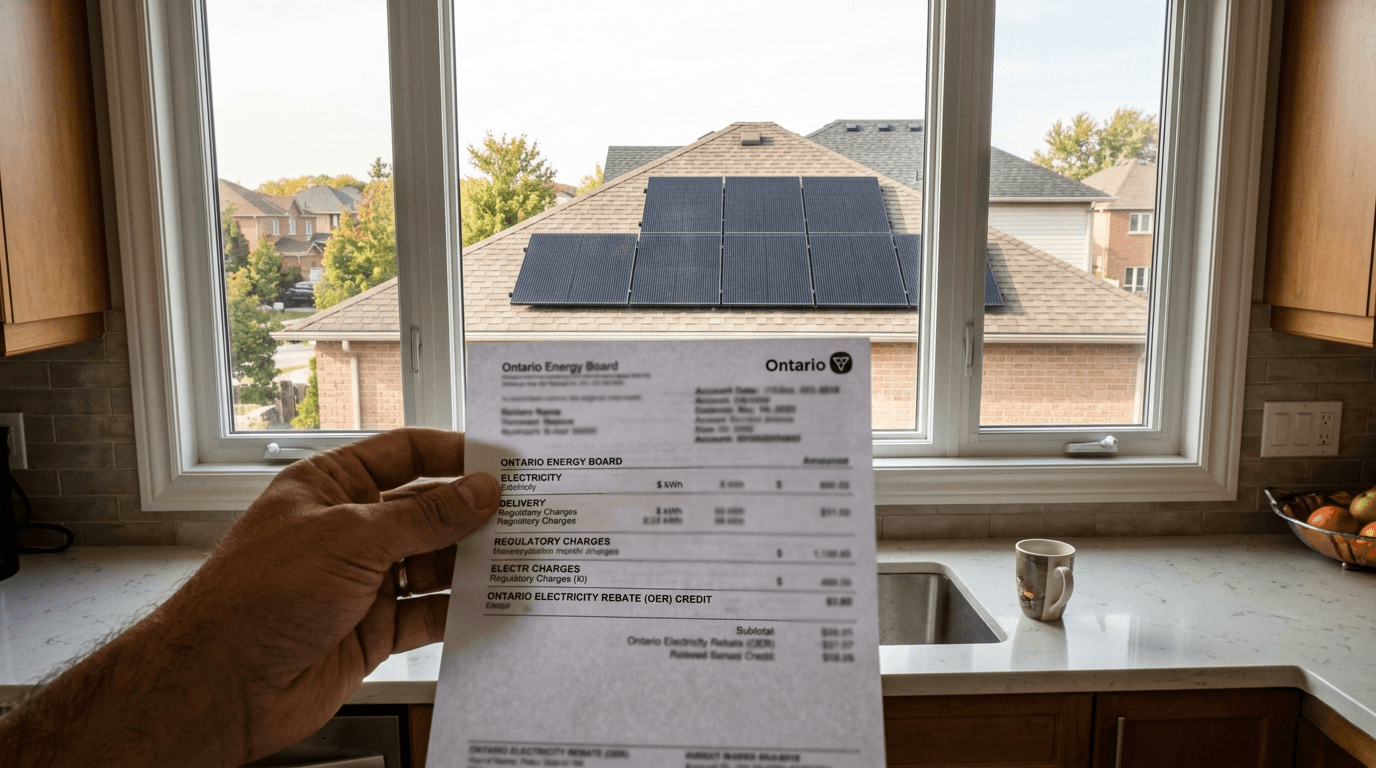
Most Ontario homeowners look at the total on their hydro bill and file it away. Here is what every single line actually means: electricity charges (TOU, Tiered, or ULO), delivery charges (the $51.18/month fixed Toronto Hydro fee plus variable per-kWh), regulatory charges, the embedded Global Adjustment, the 23.5% Ontario Electricity Rebate, and 13% HST, plus exactly which charges solar panels eliminate and which ones stay. By Marcus Thibodeau, Solar X Residential Energy Analyst.

Read More

Does Home Insurance Cover Solar Panels in Ontario? (2026 Guide) - Homeowner Guide
Homeowner Guide

Does Home Insurance Cover Solar Panels in Ontario? (2026 Guide)

Before your solar installer arrives, there is one phone call most Ontario homeowners forget to make. Most Ontario home insurance policies cover rooftop solar panels under dwelling coverage, but coverage is not automatic. You must notify your insurer, update your dwelling coverage limit to reflect the system's full replacement value, and confirm specific perils are covered. Typical annual premium increase: $75 to $150. Ground-mounted systems hit the 10% other-structures cap. Equipment breakdown (inverter failure) requires a separate endorsement. The five-step pre-install checklist that protects your policy.

Read More

Ontario Commercial Solar Incentive Drops June 30, 2026 - Ontario Financing Programs
Ontario Financing Programs

Ontario Commercial Solar Incentive Drops June 30, 2026

On June 30, 2026, Save on Energy is cutting the Retrofit Program commercial solar PV incentive from $860 to $770 per kW AC, a 10 percent reduction. Complete applications submitted before the cutoff are honoured at the higher rate, subject to review and approval. Microgeneration systems up to 10 kW DC stay at $1,000/kW DC. Who qualifies, the one rule that decides your rate, and what a smart business does before June 30. By the Solar X Team (ESA/ECRA licensed, NABCEP certified).

Read More

Ground Mount Solar Ontario: Bifacial Panels and the HRS Catch - Technology
Technology

Ground Mount Solar Ontario: Bifacial Panels and the HRS Catch

Real production gains for bifacial ground mount solar in Ontario: typical 5 to 15 percent over one-sided panels, up to 30 percent over snow or white gravel. Yes, you can net meter a ground mount under O. Reg. 541/05 (since the 2021 revocation of O. Reg. 274/18). No, ground mount does not qualify for the HRS rebate, which is rooftop only. The tradeoff: HRS recipients give up net metering, ground mount owners keep it. By the Solar X Team (ESA/ECRA licensed, NABCEP certified).

Read More
SolarX - Modern Solar Solutions

Contact Us

We're here to help! Whether you have questions about solar and battery solutions, rebates, or installation, our team is ready to assist. Send us a message, and we'll get back to you soon!

Contact Information

Phone

+1 (833) 376-5279

Email

info@solar-x.ca

Office Address

955 Bay St. Suite 2307

Toronto, ON M5S 0C6, Canada

Business Hours

9 am – 8 pm, Monday - Friday

View our Privacy Policy.