
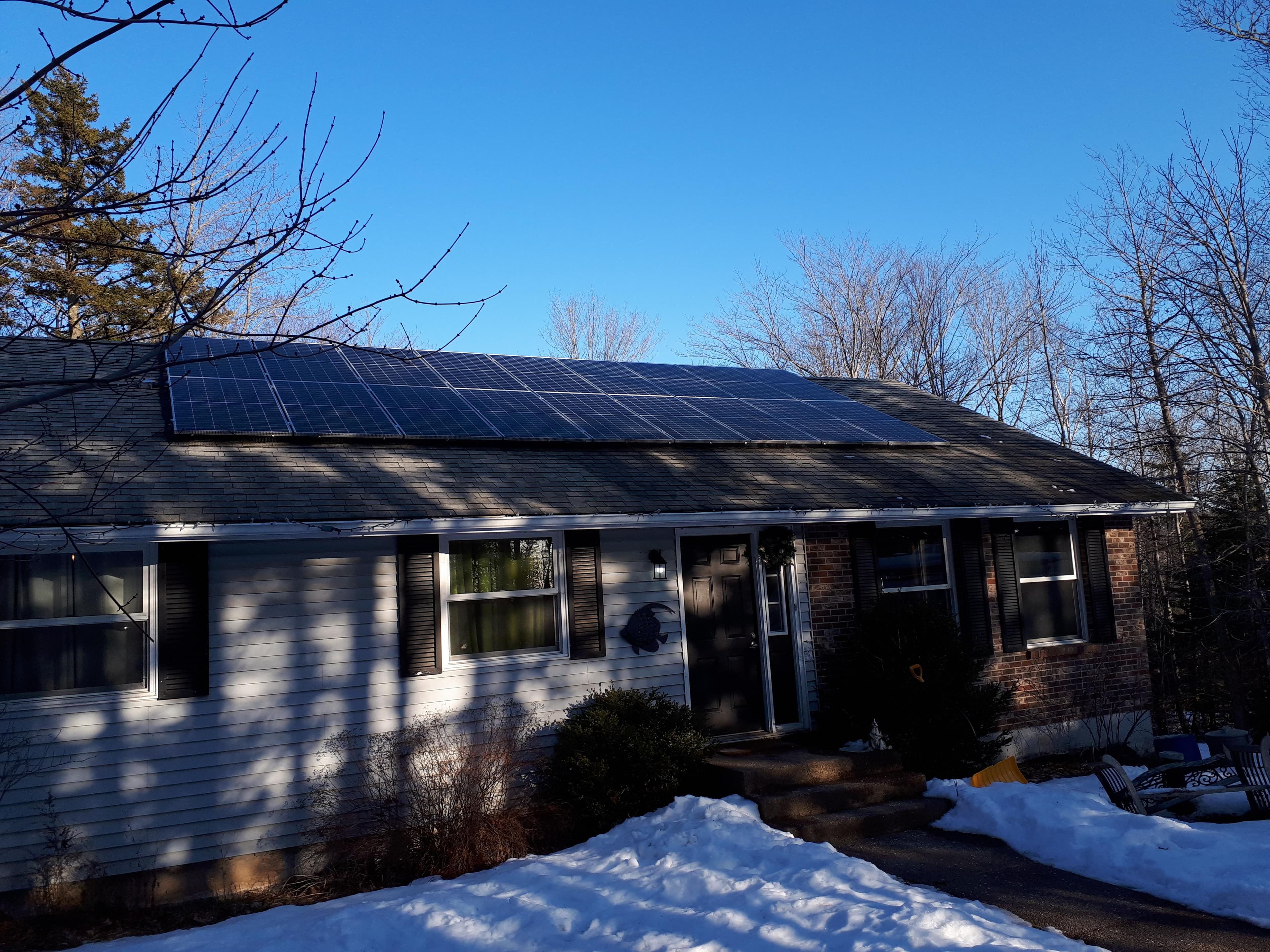
Solar grid capacity in Ontario is the one factor almost no homeowner hears about until it changes their quote. Your roof can be perfect, your budget ready, and your rebate paperwork lined up, and the local wires can still be the limit. This guide explains why a utility can limit or refuse a connection, how to check the Ontario Energy Board's new capacity map before you spend a dollar, and what your options are if your area is tight.
Written and reviewed by the Solar X Team. ESA/ECRA Licensed Electrical Contractor, Licence 7017538. 10,000+ solar and battery installations and 118 MW installed since 2018, rated 4.5 stars across 665 Google reviews. Last verified against the sources listed at the end of this article.
Why would a utility limit or refuse a solar connection?
Grid capacity is the amount of additional electricity a local transformer, feeder line, or station can safely carry. The wires in most Ontario neighbourhoods were planned for power flowing one direction: from the grid into homes. A solar system that exports pushes power the other way. When enough systems on one line export through the same midday hours, voltage can drift above the band the utility must maintain, so there is a firm engineering limit to how much export each piece of equipment can absorb. Hosting capacity is that limit: the amount of small generation a line can take, without upgrades, while staying inside safe operating conditions.
That is why every grid connected solar system in Ontario needs approval from your local distribution company before it operates. The Ontario Energy Board advises homeowners planning net metering to check with their utility, before investing, that they are eligible and that the system can be connected to the grid, according to the OEB's net metering guidance.
Across 10,000+ Solar X installs, outright refusals of small home systems have been uncommon. What happens more often in constrained pockets is quieter: a cap on system size, a request for equipment changes, a longer review, or upgrade costs that change the math. Capacity is also allocated first come, first served, a point the distributor guidance published alongside the CCIM makes explicit, so a street that had room last year may not have room today if neighbours connected first.
| Constraint | What it can mean for your project |
|---|---|
| Local transformer already loaded | The utility may cap your system size or require equipment changes |
| Constrained feeder line | Applications in that pocket can face limits or longer reviews |
| Station level limits | Larger projects may trigger a Connection Impact Assessment and upgrade costs |
| High solar density nearby | Earlier connections used the export room, since capacity is first come, first served |
The picture varies by utility. Hydro One's territory includes long rural feeders where capacity thins out, which we cover in our Hydro One solar connection guide. Dense urban grids have their own version of the problem, covered in our Toronto Hydro solar connection guide.
What is the Ontario capacity map (CCIM)?
The Centralized Capacity Information Map (CCIM) is a free Ontario Energy Board tool that shows where Ontario's distribution grid has room for new demand and for small generation such as rooftop solar. For solar, the layer that matters is Available DER Hosting Capacity. A distributed energy resource, or DER, is a system that generates or stores electricity at or near the place that uses it, such as rooftop solar panels or a home battery.
You can open the map at the OEB's Ontario Capacity Map, and the OEB explains the tool on its Centralized Capacity Information Map page.
| CCIM fact (as of September 2026) | Detail |
|---|---|
| Launched | January 29, 2026, according to the Ontario Energy Board |
| What it shows | Two layers: Available Load Capacity and Available DER Hosting Capacity, which the map's welcome text also labels Available DER Capacity |
| Data source | Ontario's local electricity distributors |
| Update cadence | At least once every three months, per the OEB |
| Intended use | Preliminary screening before you contact your utility |
| What it is not | Not real time, not address level, and not a reservation of capacity |
Source: Ontario Energy Board, September 2026.
Treat the CCIM as a screening tool, not a verdict. The OEB is explicit that the map does not replace your utility's formal connection process, and displayed capacity is not reserved for you. It is still a major step forward. A few utilities published their own capacity maps, but before January 2026 there was no single province wide view, and the first sign of a constraint was often a surprise partway through an application.
What changed on May 1, 2026: the 12 kW threshold
According to the Ontario Energy Board's Distribution System Code, the maximum size for a micro embedded generation facility rose from 10 kW to 12 kW on May 1, 2026. Micro projects follow a simpler, faster connection process. Systems above the threshold move into the larger connection stream, which can include a Connection Impact Assessment, a technical study of how the system would affect the local grid. The OEB describes the same package of amendments as lowering barriers to DER connections by reducing costs and improving timelines, fairness, and consistency.
For homeowners, this means more room to size a system around modern loads such as an EV or a heat pump without leaving the simple connection lane. We break down the sizing implications in our guide to Ontario's 12 kW residential solar limit.
One caution: a bigger allowance is not the same as more capacity. The 12 kW figure is a process threshold. The space available at your address still depends on your local transformer and feeder, and your utility still makes that call.
What are your options if capacity is tight in your area?
A constrained area is rarely the end of the project. It usually changes the design. These are the levers, and each one still requires utility approval, which is never guaranteed.
| Option | How it works | Tradeoff |
|---|---|---|
| Resize the system | A smaller inverter fits the available export room | Less production, but the connection can proceed |
| Cap export with a PCS | A distributor approved Power Control System limits what leaves the house while the panels serve your home first | Nameplate up to 24 kW can stay in the micro embedded process when export is capped at 12 kW, subject to utility approval of the PCS |
| Load displacement design | The system serves only your home, with no export to the grid | No net metering credits, and this is the design the Home Renovation Savings rebate requires |
| Add a battery | Stores midday surplus in the home instead of exporting it | Higher upfront cost, partly offset by the battery rebate where the application is approved |
| Phase the project | Connect what fits now and revisit if the utility upgrades the area | No date can be promised for utility upgrades |
There is also a newer lever, in force since May 1, 2026. Per the OEB's DER Connection Procedures, a connection is processed as micro embedded when a distributor approved Power Control System limits export, the system's nameplate capacity is no more than 24 kW, and export capacity is no more than 12 kW. In plain terms, your system can be bigger than 12 kW if it is set up so no more than 12 kW ever leaves the house. The utility may run analysis or a simplified study, with a fee capped at the lowest simplified CIA tier, and may take up to 30 additional days before making an offer to connect or giving reasons for a refusal. The OEB also directs distributors to keep the overall connection cost as close as possible to a typical micro embedded connection. PCS approval varies by distributor, so treat this as a design conversation, not a default.
The load displacement path deserves attention here. Load displacement means the electricity your panels generate is used entirely inside your home, and the design must ensure nothing is exported, so export capacity constraints matter far less. Per the official Home Renovation Savings program rules, the solar incentive, advertised at up to $5,000 back as of September 2026, and the companion battery incentive are for load displacement projects only, and homeowners who take them are not eligible for a net metering agreement with their utility. The program also directs participants and contractors not to purchase or install any equipment before written preapproval from the Home Renovation Savings team and the local utility.
Net metering, by contrast, credits you for exported power and depends directly on export room at your address. If you are weighing the two, start with our net metering in Ontario explainer and then the HRS rebate versus net metering decision guide. Every home is different, and savings under either path depend on your usage, your rate plan, and program eligibility at the time you apply.
How Solar X handles grid capacity on every project
We treat capacity as a design input, not a surprise. On every project, our process is: screen the area using the CCIM and utility information, design the system to fit what the address can support, submit the utility connection application and secure approvals before installation, complete the ESA inspection, and coordinate rebate paperwork where the home qualifies. We do not promise install dates until permits, ESA, utility, and rebate approvals are in place, because none of those approvals is ours to guarantee.
And when the honest answer is that your address cannot support the system you want, we tell you before you sign, not after. That is how a company gets to 10,000+ installs with its reviews intact.
Solar grid capacity in Ontario is checkable, plannable, and in most cases workable. The homeowners who get burned are the ones who find out about it last. Check the map, ask your utility, and work with an installer that verifies capacity at your address before you commit.
FAQ: solar grid capacity in Ontario
Can a utility refuse a solar connection in Ontario?
Yes. Your local utility must confirm that a solar system can connect safely before it is approved, and the Ontario Energy Board advises confirming eligibility and connection with your utility before you invest. Outright refusals for small home systems are uncommon, but where a transformer or feeder is constrained the utility can limit system size, require changes, or delay the connection.
How do I check solar grid capacity at my address?
Start with the Ontario Energy Board's Centralized Capacity Information Map, which shows available DER hosting capacity across Ontario using data updated at least every three months. Then ask your local utility, which holds the final and most current answer for your exact address. A qualified installer such as Solar X runs both checks during the design stage before you sign anything.
Is the Ontario capacity map accurate for my exact house?
Treat it as a screening tool, not a verdict. The OEB states the map is for preliminary screening, uses distributor data refreshed at least quarterly, and does not reserve capacity or replace your utility's formal connection process. Space shown on the map can be taken by earlier applicants, so your utility's review of your address decides the outcome.
Does grid capacity affect the Home Renovation Savings rebate path?
Less than it affects net metering, because the rebate path requires a load displacement design that serves only your home and does not export to the grid. Per the official program rules, homeowners who take the solar and battery rebate are not eligible for net metering. Utility connection approval is still required, and preapproval must come before any equipment is installed.
What is a Connection Impact Assessment?
A Connection Impact Assessment, or CIA, is a technical study your utility runs to check how a proposed generation system would affect the local grid. In Ontario, systems above the 12 kW micro embedded threshold generally require one, while smaller home systems follow a simpler connection process. A CIA can add cost and review time, which is one reason most homes stay at or under 12 kW.
Does the 12 kW limit mean I can always connect 12 kW?
No. The 12 kW figure is a process threshold, not a promise of space. It means systems at or under 12 kW qualify for the simpler micro embedded connection process under the OEB's rules effective May 1, 2026. The capacity available at your address still depends on your local transformer and feeder, and your utility makes that call.
Can I install more than 12 kW of solar in Ontario?
Yes, in two ways. Systems above 12 kW can apply through the larger connection process with a Connection Impact Assessment. Since May 1, 2026, there is also a simpler route: with a distributor approved Power Control System limiting export to 12 kW, a system up to 24 kW of nameplate capacity is processed as micro embedded. Utility approval is still required either way.
Sources
- Ontario Energy Board, Centralized Capacity Information Map: oeb.ca
- Ontario Energy Board, Ontario Capacity Map tool: oeb.planview.ca
- Ontario Energy Board, Net metering: oeb.ca
- Ontario Energy Board, Distribution System Code (May 1, 2026 amendments): oeb.ca
- Ontario Energy Board, DER Connection Procedures (Section 8.1, export limited capacity using a Power Control System): oeb.ca (PDF)
- Home Renovation Savings program, Solar and battery storage: homerenovationsavings.ca