
Future of Solar Energy in Canada: Trends
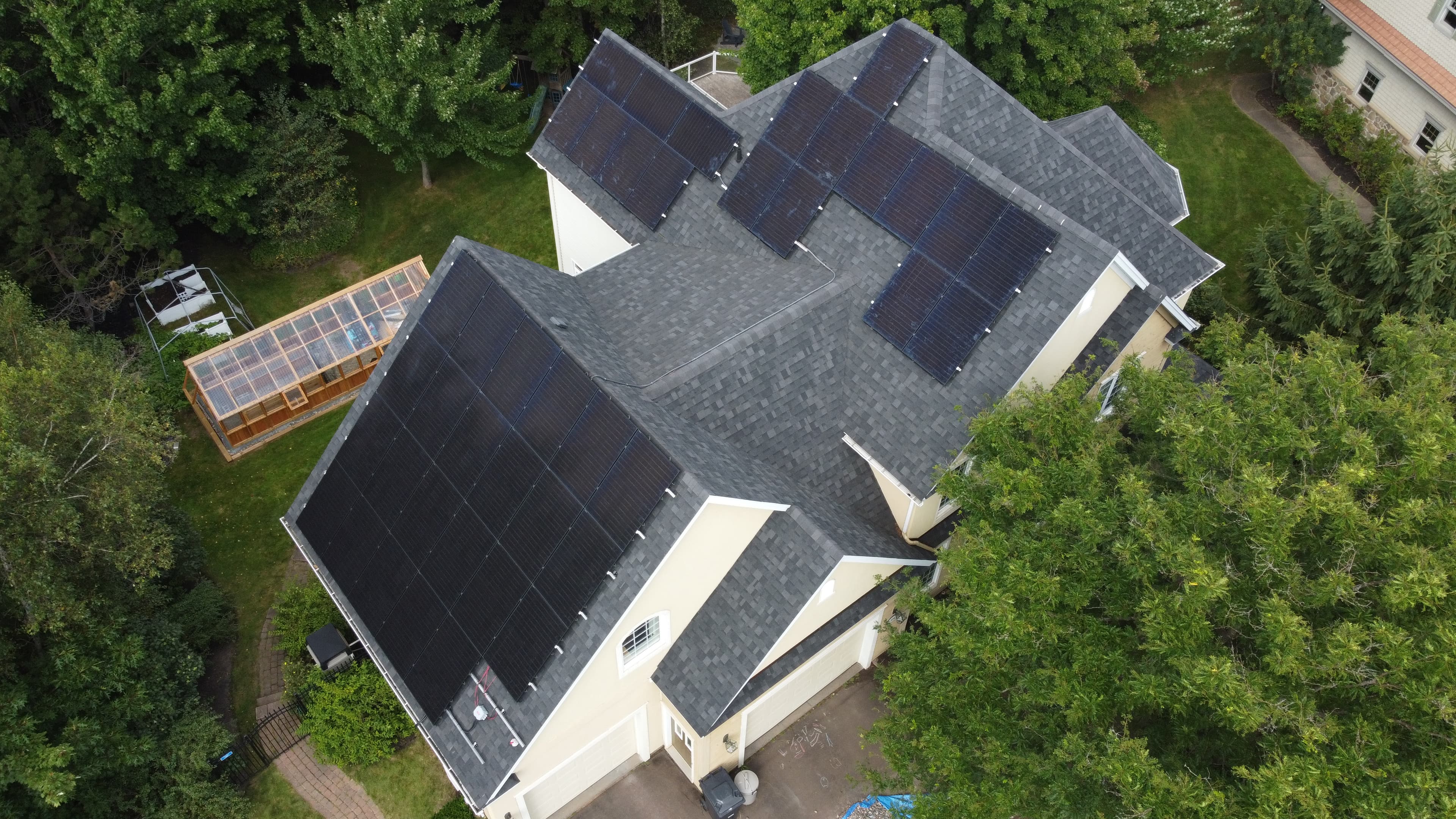
What is the future of solar energy in Canada?
The future of solar energy in Canada is bright, driven by breakthrough technologies like bifacial panels (30% more efficient), perovskite solar cells, AI-powered optimization, and virtual power plants. With falling costs, improved efficiency, and expanding battery storage, Canada is positioned to dramatically increase solar adoption, targeting significant renewable energy growth by 2030. Innovations like agrivoltaics and building-integrated solar are making renewable energy more accessible and profitable than ever.
Solar energy in Canada has come a long way from its early days of niche applications and high costs. Today, as technology advances at breakneck speed and costs continue to plummet, solar is becoming not just viable but essential for homeowners and businesses across the country. The question is no longer "if" solar will dominate Canada's energy future, but "how soon" and "what innovations will drive it?"
From next-generation solar panels that capture more energy than ever before, to artificial intelligence that predicts and optimizes energy usage in real-time, the solar industry is undergoing a transformation that promises to reshape how Canadians power their homes, businesses, and communities.
In this comprehensive guide, we'll explore the cutting-edge trends and innovations that are shaping the future of solar energy in Canada — and what they mean for you.
Next-Generation Solar Panel Technology
Bifacial Solar Panels: Capturing Energy from Every Angle
Traditional solar panels capture sunlight from one side. Bifacial panels, however, are designed to capture light from both the front and back, utilizing reflected sunlight from the ground, snow, or surrounding surfaces. In Canada — especially in provinces with significant snowfall like Alberta, Saskatchewan, and Ontario — this innovation is a game-changer.
Bifacial panels can produce up to 30% more energy than traditional monofacial panels in optimal conditions. During winter months, when snow covers the ground and reflects sunlight upward, bifacial panels shine even brighter. As these panels become more affordable and widely adopted, they'll become the standard for residential and commercial installations across Canada.
Perovskite Solar Cells: The Next Efficiency Breakthrough
One of the most exciting developments in solar technology is perovskite solar cells. These cells use a unique crystal structure that can be manufactured at lower costs than traditional silicon panels while achieving higher conversion efficiencies. In laboratory settings, perovskite cells have already exceeded 25% efficiency, with potential to reach 30% or higher.
What makes perovskites particularly promising for Canada is their flexibility and lightweight nature. They can be applied to curved surfaces, integrated into building materials, or even printed onto flexible substrates — opening up entirely new applications for solar energy. While still in development for mass-market durability, perovskite technology is expected to revolutionize the solar industry within the next 5-10 years.
Tandem Solar Cells: Combining the Best of Both Worlds
Tandem solar cells layer multiple photovoltaic materials — typically silicon and perovskite — to capture different wavelengths of sunlight more efficiently. By stacking these materials, tandem cells can achieve efficiencies well above 30%, far surpassing traditional single-junction panels.
For Canadian homeowners, this means smaller solar arrays can generate the same amount of power, making solar viable even on homes with limited roof space. As manufacturing scales up, tandem cells are poised to become a mainstream technology by the end of the decade.
Energy Storage: The Key to Solar Independence
Advanced Battery Technology
Battery storage has always been the missing piece of the solar puzzle. Solar panels generate power during the day, but most homeowners use the bulk of their electricity in the evening. Without storage, excess solar energy is sent back to the grid at low compensation rates, reducing overall savings.
The future of solar in Canada is intrinsically tied to battery storage innovation. Lithium iron phosphate (LFP) batteries are emerging as the preferred choice for home energy storage due to their longer lifespan, safety, and lower cost compared to traditional lithium-ion batteries. Companies like Tesla, Enphase, and Growatt are continuously improving battery capacity, charge cycles, and integration with solar systems.
Additionally, solid-state batteries — still in development — promise even greater energy density, faster charging, and improved safety. Once commercialized, solid-state technology could make multi-day energy storage affordable and practical for Canadian homes, especially in remote areas or regions prone to grid instability.
Virtual Power Plants (VPPs)
Imagine a network of thousands of homes, each with solar panels and battery storage, all connected and coordinated to act as a single, distributed power plant. That's the concept behind virtual power plants (VPPs), and they're already being tested and deployed across Canada.
VPPs aggregate the stored energy from multiple residential and commercial batteries, allowing utilities to tap into this distributed resource during periods of peak demand. Homeowners participating in VPPs can earn revenue by selling their stored energy back to the grid when electricity prices are high, creating a new income stream while supporting grid stability.
In Alberta, for example, companies like EQUS and ReWatt Power are pioneering VPP programs that compensate solar customers for their contributions to grid resilience. Ontario and British Columbia are also exploring similar models. As these programs expand, solar-plus-storage systems will become even more financially attractive.
Artificial Intelligence and Smart Energy Management
Artificial intelligence (AI) is transforming how solar systems operate, optimizing energy production, consumption, and storage in real-time. AI-powered energy management systems can:
- Predict energy production: By analyzing weather patterns, historical data, and panel performance, AI can forecast how much energy your system will generate hours or days in advance.
- Optimize battery usage: AI determines the best times to charge and discharge your battery based on electricity rates, weather forecasts, and household consumption patterns, maximizing savings.
- Detect maintenance needs: Machine learning algorithms monitor panel performance and can identify degradation, shading issues, or equipment failures before they become major problems.
- Coordinate with smart grids: AI enables seamless integration with utility grids, automatically adjusting energy flows to balance supply and demand.
Companies like Tesla, SolarEdge, and Enphase are already integrating AI into their products, and as the technology matures, AI-driven solar systems will become the norm in Canada.
Building-Integrated Photovoltaics (BIPV)
What if your roof tiles, windows, and walls could generate electricity? That's the vision behind building-integrated photovoltaics (BIPV). Unlike traditional solar panels that sit on top of roofs, BIPV materials replace conventional building components with solar-generating alternatives.
Examples include:
- Solar roof tiles: Tesla's Solar Roof is the most well-known example, blending aesthetics with functionality.
- Solar windows: Transparent solar cells can be integrated into windows, generating power without obstructing views.
- Solar facades: Building exteriors clad with photovoltaic materials turn entire structures into power generators.
BIPV is particularly promising for urban areas where roof space is limited. As costs decline and designs improve, expect to see more Canadian buildings incorporating solar technology into their architecture.
Agrivoltaics: Combining Solar and Agriculture
Agrivoltaics — the practice of co-locating solar panels with agricultural activities — is gaining traction worldwide, and Canada's vast agricultural landscape makes it an ideal candidate for this innovation.
By mounting solar panels above crops or grazing land, farmers can generate clean energy while continuing to use their land for food production. Studies have shown that some crops actually benefit from the partial shade provided by solar panels, reducing water evaporation and heat stress.
In provinces like Alberta, Saskatchewan, and Manitoba, where agriculture is a dominant industry, agrivoltaics offers a dual revenue stream: selling crops and selling electricity. As regulatory frameworks evolve to support agrivoltaics, expect to see solar farms integrated into Canada's agricultural heartland.
Floating Solar Farms
Canada is home to millions of lakes, reservoirs, and other bodies of water — many of which could host floating solar farms. These installations, known as "floatovoltaics," mount solar panels on platforms that float on water surfaces.
Floating solar has several advantages:
- Increased efficiency: Panels stay cooler due to the water's cooling effect, improving performance.
- Land conservation: No valuable land is used, preserving space for agriculture or development.
- Reduced evaporation: Solar panels shade the water, reducing evaporation in reservoirs.
While still rare in Canada, floating solar projects are being piloted in regions with abundant water resources. As the technology matures, expect to see more installations on hydroelectric reservoirs and industrial water bodies.
Policy and Incentive Trends
Technology alone won't drive the solar revolution — supportive policies and incentives are equally critical. Canada's federal and provincial governments are increasingly committed to renewable energy, evidenced by programs like the Canada Greener Homes Loan, provincial solar rebates, and tax incentives for businesses.
Looking ahead, expect:
- Expanded rebate programs: As solar adoption grows, provinces will likely increase funding for residential and commercial incentives.
- Net metering reforms: Improved net metering policies will ensure fair compensation for solar energy sent back to the grid.
- Carbon pricing benefits: Higher carbon prices will make fossil fuels less competitive, accelerating the shift to solar.
- Streamlined permitting: Simplified approval processes will reduce installation timelines and costs.
Canada's commitment to achieving net-zero emissions by 2050 means solar energy will play a central role in the country's energy transition.
The Bottom Line: Why Now is the Time to Go Solar
The future of solar energy in Canada is not just promising — it's already unfolding. With breakthrough technologies like bifacial panels, perovskites, and AI optimization, combined with expanding battery storage and supportive policies, solar is more accessible, affordable, and powerful than ever before.
Whether you're a homeowner looking to reduce electricity bills, a business seeking energy independence, or simply someone who wants to contribute to a cleaner future, there's never been a better time to invest in solar.
Ready to Join the Solar Revolution?
Solar X is at the forefront of Canada's solar transformation, offering cutting-edge technology, expert installation, and comprehensive support. From initial consultation to ongoing maintenance, we're here to help you harness the power of the sun.
Contact Solar X today to book your free assessment and discover how solar can transform your energy future. The innovations shaping tomorrow's solar industry are available today — don't wait to get started.
Frequently Asked Questions
What is the future of solar energy in Canada?
The future includes advanced technologies like bifacial solar panels, perovskite cells, AI-powered energy optimization, virtual power plants, and expanded battery storage. Canada's solar capacity is expected to grow significantly as costs decrease and efficiency improves, with innovations like agrivoltaics and building-integrated photovoltaics becoming mainstream.
What are the latest solar panel innovations in Canada?
Latest innovations include bifacial solar panels that capture light from both sides (30% more energy), perovskite solar cells with higher efficiency potential, tandem cells combining multiple materials, and building-integrated photovoltaics (BIPV) that blend seamlessly into architecture. These technologies are making solar more efficient and accessible across Canada.
How will AI impact solar energy in Canada?
AI is revolutionizing solar energy through predictive maintenance, real-time energy optimization, smart grid integration, and weather forecasting. AI systems can predict panel performance, optimize battery charging/discharging cycles, and coordinate virtual power plants, maximizing efficiency and savings for Canadian homeowners.
What are virtual power plants and how do they work in Canada?
Virtual power plants (VPPs) aggregate distributed solar and battery systems to act as a single power source. In Canada, utilities and companies are creating VPPs that allow homeowners to sell excess stored energy back to the grid during peak demand, earning revenue while supporting grid stability. Alberta and Ontario are leading VPP adoption.
When will perovskite solar panels be available in Canada?
Perovskite solar cells are still in the commercial development phase, with mass-market availability expected within 5-10 years. While laboratory efficiencies have exceeded 25%, researchers are working to improve long-term durability and stability before widespread deployment. Early commercial products may appear in specialized applications within the next few years.
Are bifacial solar panels worth it in Canada?
Yes, bifacial solar panels are particularly effective in Canada due to snowfall and high-albedo surfaces that reflect sunlight onto the panels' rear sides. In optimal conditions, bifacial panels can produce 20-30% more energy than traditional monofacial panels, making them an excellent investment for Canadian climates, especially in provinces with significant snow cover.